
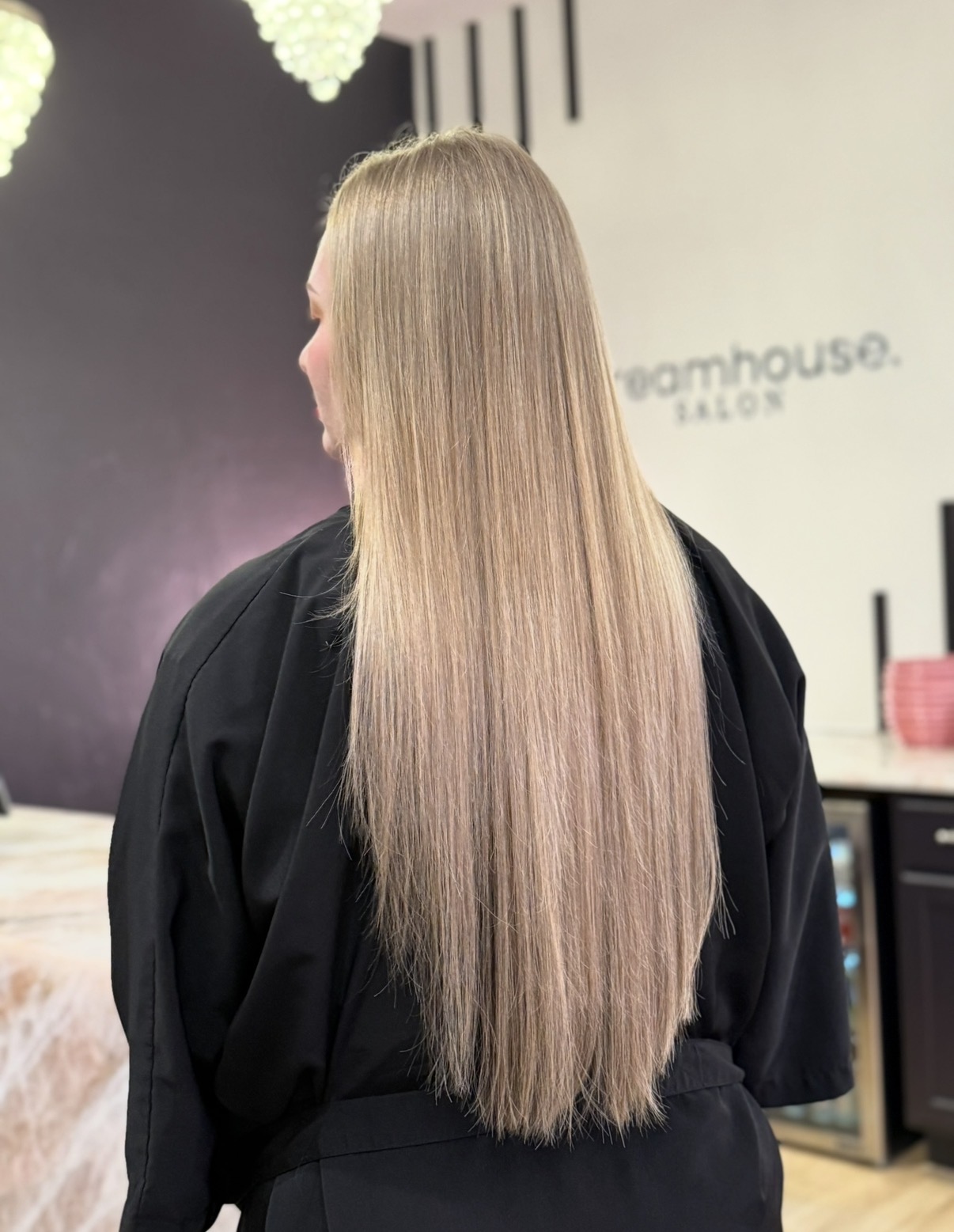
How to Sleep With Hair Extensions: Protecting Your Investment Overnight
Learning how to sleep with hair extensions is essential for keeping your hair smooth, manageable, and beautiful between salon appointments. While professional extensions are designed for everyday wear, nighttime friction and improper sleeping habits can contribute to tangling, dryness, and unnecessary tension.
At Dreamhouse Salon in downtown Fayetteville, Arkansas, we believe protecting your extension investment should be simple. With a few thoughtful adjustments to your bedtime routine, you can help preserve your hair’s appearance and longevity.
How to Sleep With Hair Extensions Without Damaging Them
The most important rule is to avoid sleeping with loose, tangled, or wet extensions.
As you move throughout the night, your hair rubs against your pillowcase. Consequently, friction can create tangles, particularly around extension attachment points.
Before bed, gently brush your hair using an extension-friendly brush. Start at the ends and gradually work upward while supporting the attachments.
Next, gather your hair into a loose, low braid or ponytail. This helps prevent excessive movement without placing unnecessary tension on your scalp.
Additionally, avoid tight elastics or hairstyles that pull against your extension attachments.
Why You Should Never Sleep With Wet Extensions
Going to bed with wet extensions is one of the easiest ways to create unnecessary maintenance problems.
Wet hair is more vulnerable to stretching and mechanical damage. Furthermore, moisture trapped around weft rows or keratin bonds can make tangling more likely.
For clients wearing weft extensions, damp attachment areas may also contribute to scalp discomfort.
Therefore, thoroughly dry your hair before going to bed, paying particular attention to attachment points.
At Dreamhouse Salon, we recommend planning your wash routine early enough to allow proper drying and detangling.
Are Silk or Satin Pillowcases Better for Extensions?
Your pillowcase can influence how much friction your hair experiences overnight.
Traditional cotton pillowcases may create more resistance as your hair moves. Meanwhile, smooth silk or satin surfaces can help reduce friction and tangling.
Although neither material completely prevents damage, both can be useful additions to your nighttime routine.
Additionally, a loose satin bonnet may help contain longer extensions while you sleep. However, choose one that doesn’t compress or pull against attachment points.
For many clients, combining a smooth pillowcase with a loose braid provides a practical balance of comfort and protection.
Do K-Tips and Wefts Need Different Nighttime Care?
Both extension methods benefit from gentle brushing, proper drying, and protective styling.
K-Tip Extensions: Because individual keratin bonds move independently, carefully separating and detangling the hair around attachments is important. Avoid tight nighttime hairstyles that place tension on individual bonds.
Weft Extensions: Focus on preventing tangling around the attachment rows. Additionally, make sure your wefts are completely dry before sleeping.
At Dreamhouse Salon, we customize aftercare recommendations according to your installation method, natural hair density, and lifestyle.
Ultimately, consistent habits matter more than complicated routines or expensive accessories.
Protect Your Extensions With Dreamhouse Salon
Clients throughout Fayetteville, Bentonville, Rogers, and Springdale deserve extension results that remain beautiful beyond installation day.
At Dreamhouse Salon, we work with professional K-Tip and weft extension methods while emphasizing personalized maintenance and long-term hair health.
Whether you’re new to extensions or maintaining an existing installation, understanding how to sleep with hair extensions can help reduce tangling and unnecessary wear.
Ready for fuller, longer hair with a maintenance routine that fits your lifestyle? Schedule a personalized hair extension consultation at Dreamhouse Salon in Fayetteville, Arkansas.
Leave a Reply