
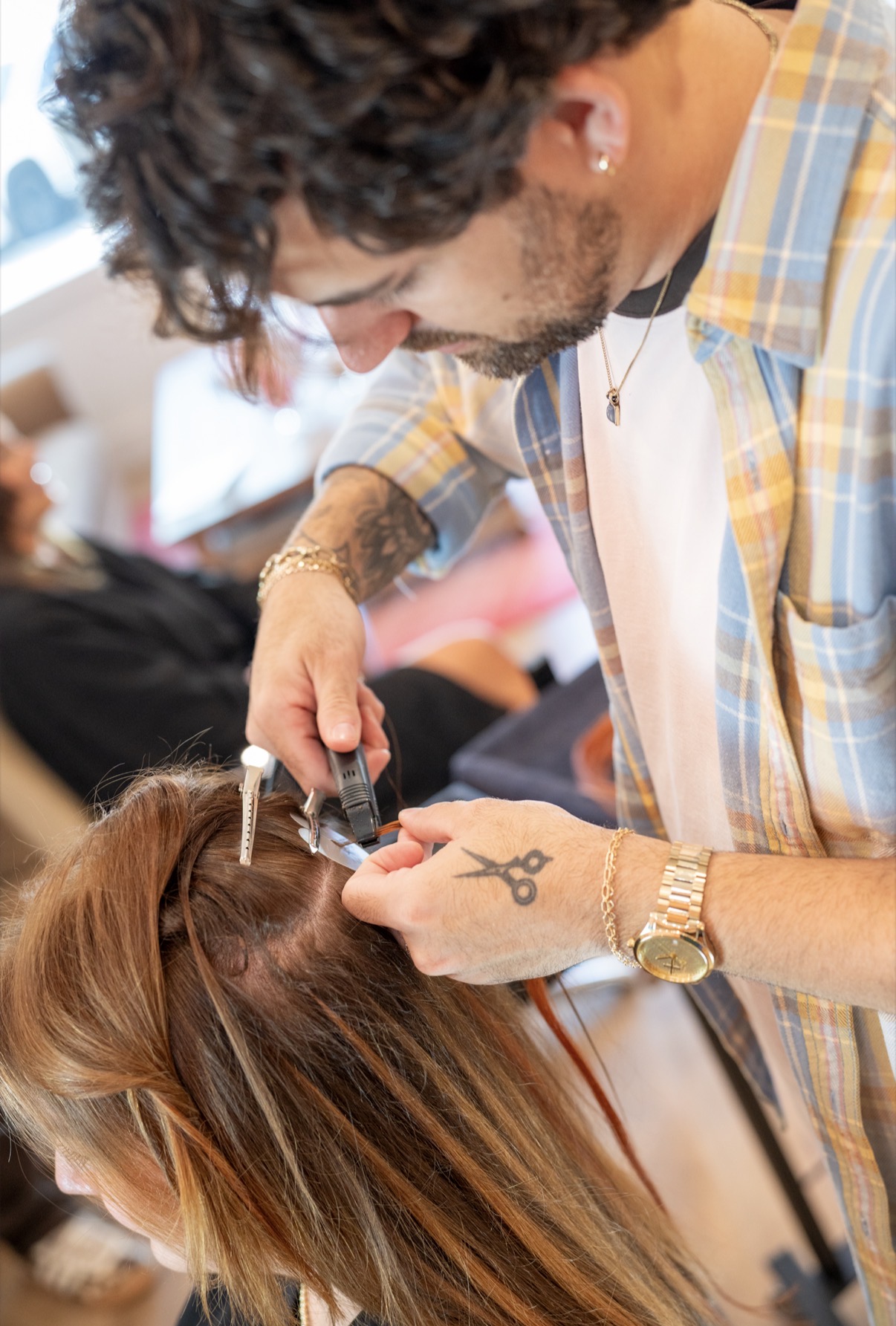
Hair Extensions After Hair Loss: When Is It Safe to Start Wearing Extensions Again?
Hair extensions after hair loss can be an exciting possibility for anyone hoping to regain the appearance of fullness and length. However, determining when it’s safe to wear extensions again depends on your scalp health, the cause of your hair loss, and the strength of your remaining hair.
At Dreamhouse Salon in downtown Fayetteville, Arkansas, we understand that hair loss can be an emotional experience. Whether you’ve experienced postpartum shedding, hormonal changes, stress-related hair loss, or medical treatment, your natural hair’s health should always come first.
Hair Extensions After Hair Loss: When Is It Safe?
There isn’t a universal waiting period for installing extensions following hair loss.
Instead, the appropriate timing depends on why your hair was shedding and whether the underlying condition has stabilized.
For example, temporary shedding after pregnancy or significant stress may improve as your natural growth cycle recovers. However, other forms of hair loss require ongoing medical evaluation or treatment.
Before considering extensions, it’s important to understand whether your scalp is healthy and your existing hair can safely support additional weight.
A dermatologist can help identify the cause of hair loss and determine whether traction or added tension could worsen your condition.
Ultimately, waiting until your hair is sufficiently healthy may help prevent further complications.
Why Installing Extensions Too Early Can Be Risky
Traditional extensions rely on your natural hair to support their attachments.
When hair is fragile, actively shedding, or significantly reduced in density, additional weight and tension may increase the risk of breakage.
Furthermore, repeated pulling around attachment points can contribute to traction alopecia, a form of hair loss associated with prolonged tension.
Even lightweight extensions aren’t automatically appropriate for every client.
For this reason, a responsible stylist should evaluate your natural hair’s density, condition, and ability to support the proposed installation.
At Dreamhouse Salon, we believe declining or postponing an extension service can sometimes be the best recommendation.
Protecting your natural hair is always more important than rushing into a transformation.
Are K-Tips or Wefts Better After Hair Loss?
Both K-Tip and weft extensions can create beautiful results when natural hair is healthy enough to support them.
K-Tip Extensions: Individual keratin bonds allow customized placement and distribution. However, each attachment still places weight on a section of natural hair.
Weft Extensions: Wefts provide substantial fullness and length through strategically installed rows. Nevertheless, adequate density and attachment support are essential.
Neither method should be considered universally safer for someone recovering from hair loss.
Instead, your stylist should evaluate your individual circumstances and recommend an appropriate approach.
In some cases, traditional extensions may not be advisable, even when regrowth has begun.
What If Your Hair Is Still Too Thin for Extensions?
If your natural hair cannot comfortably support traditional extensions, you may have other options.
Hair toppers can provide coverage for certain areas of thinning without relying on conventional extension attachments.
Additionally, customized mesh or meshless hair integration systems may be worth exploring, depending on your hair loss pattern and scalp condition.
However, these systems also require professional assessment. They aren’t automatically suitable for active hair loss or sensitive scalps.
At Dreamhouse Salon, we believe clients deserve realistic guidance about their options rather than promises that every method works for everyone.
Personalized Hair Loss Consultations in Northwest Arkansas
Whether you’re visiting from Fayetteville, Bentonville, Rogers, or Springdale, rebuilding confidence after hair loss deserves a thoughtful approach.
At Dreamhouse Salon, we consider your natural hair’s condition, desired coverage, lifestyle, and maintenance expectations before discussing possible solutions.
Ultimately, choosing hair extensions after hair loss should be a carefully considered decision made with your hair’s long-term health in mind.
If you’re experiencing ongoing or unexplained shedding, consult a dermatologist before pursuing an attachment-based hair system.
Ready to explore your options? Schedule a personalized consultation at Dreamhouse Salon in downtown Fayetteville, Arkansas, to discuss whether extensions or an alternative hair solution may be appropriate for you.
Leave a Reply